
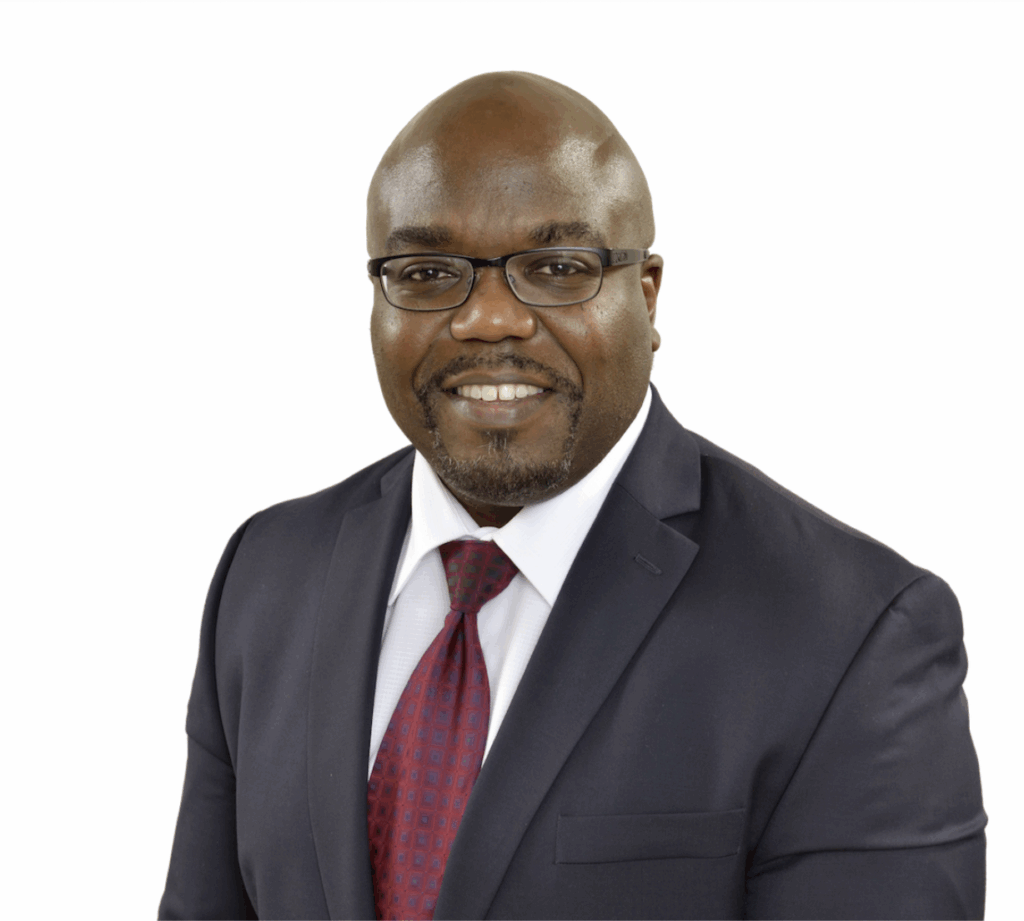
Dr. Julius O. Ebinu
Dr. Julius Ebinu is an Associate Professor of Neurosurgery, Minimially Invasive Surgery, Spine Surgery, and neuro-oncology at Queen’s University, Kingston. He is an attending Neurosurgeon at Kingston Health Sciences Centre.
In addition to general neurosurgery, Dr. Ebinu specializes in the surgical treatment of complex spinal disorders including spinal cord tumors, total disc replacement, spinal reconstruction, and spinal cord injury.
Grounding Philosophy
Dr. Ebinu is a dual-fellowship trained spine and skull base/neuro-oncology neurosurgeon whose clinical practice highlights a patient-centred approach to managing numerous brain and spinal disorders with an emphasis on state-of-the-art computer-guided technologies, robotics and minimally invasive techniques to improve patient outcomes and maximize the safety of surgery.
Dr. Ebinu is a graduate of the Cumming School of Medicine at the University of Calgary. He trained at the Neurosurgical residency program at the University of Toronto. He then went on to complete a skull base neuro-oncology fellowship at University of Toronto/Toronto Western Hospital under the mentorship of Drs. Fred Gentili, Gelareh Zadeh, and Mark Bernstein. Subsequently, Dr. Ebinu undertook an additional year of fellowship training in complex and minimally invasive spine surgery at the University of Miami Miller School of Medicine/Jackson Memorial Hospital under the tutelage of renowned Neurosurgeons Drs. Barth Green, Allan Levi, and Michael Wang. He is one of the few dual-fellowship trained neurosurgeons in both skull-base neuro-oncology and complex spine surgery. Dr. Ebinu received his Board certification in Neurosurgery and is a fellow of the Royal College of Physicians and Surgeons of Canada and the American Association of Neurological Surgeons.
Prior to his neurosurgery residency, Dr. Ebinu received his PhD in Biochemistry, Molecular Biology and Oncology from the University of Alberta. During his PhD, he discovered and characterized a novel regulator of the Ras oncoprotein, a key player in tumorigenesis, and published his work in the prestigious journal Science. He was awarded the esteemed Canadian Institutes of Health Research (CIHR) scholarship to attend Harvard University and pursue a post-doctoral fellowship in neurobiology.
Dr. Ebinu has been a recipient of major scholarships and awards and has published in top peer-reviewed scientific journals. His research interests include understanding the biology and treatment of brain and spinal cord tumors, and identifying the mechanisms of functional recovery in spinal cord injury. He is also interested in studying the use of minimally invasive techniques (endoscopic and robotics) to treat various brain and spine disorders to improve patient outcomes and minimize surgical morbidity, especially in elderly patients. In accordance with the Queen’s University tradition of excellence, his main focus is providing comprehensive and high quality patient care and in having a global impact on the treatment of neurosurgical disorders through outstanding research, innovation, and leadership.
Research Interests

Emerging Technology and Techniques
Novel technology, minimally invasive approaches, and robotic/endoscopic surgery to improve patient outcomes and minimize surgical morbidity. Also, the use of artificial intelligence to streamline neurosurgical care, improve risk stratification, and facilitate referral.

Globalism and Equity in Neurosurgical Care
Engaging in global outreach by facilitating neurosurgery training programs in developing countries. Along with improving neurosurgical care by identifying underserved populations and responding to targeted needs assessments